
Artificial intelligence is advancing at an extraordinary pace, but the hardware powering it is approaching a critical threshold. Every new generation of AI models demands more computational power, greater memory bandwidth, and substantially higher energy consumption. While semiconductor manufacturers continue refining silicon chips, the industry is confronting increasingly difficult physical and engineering constraints.
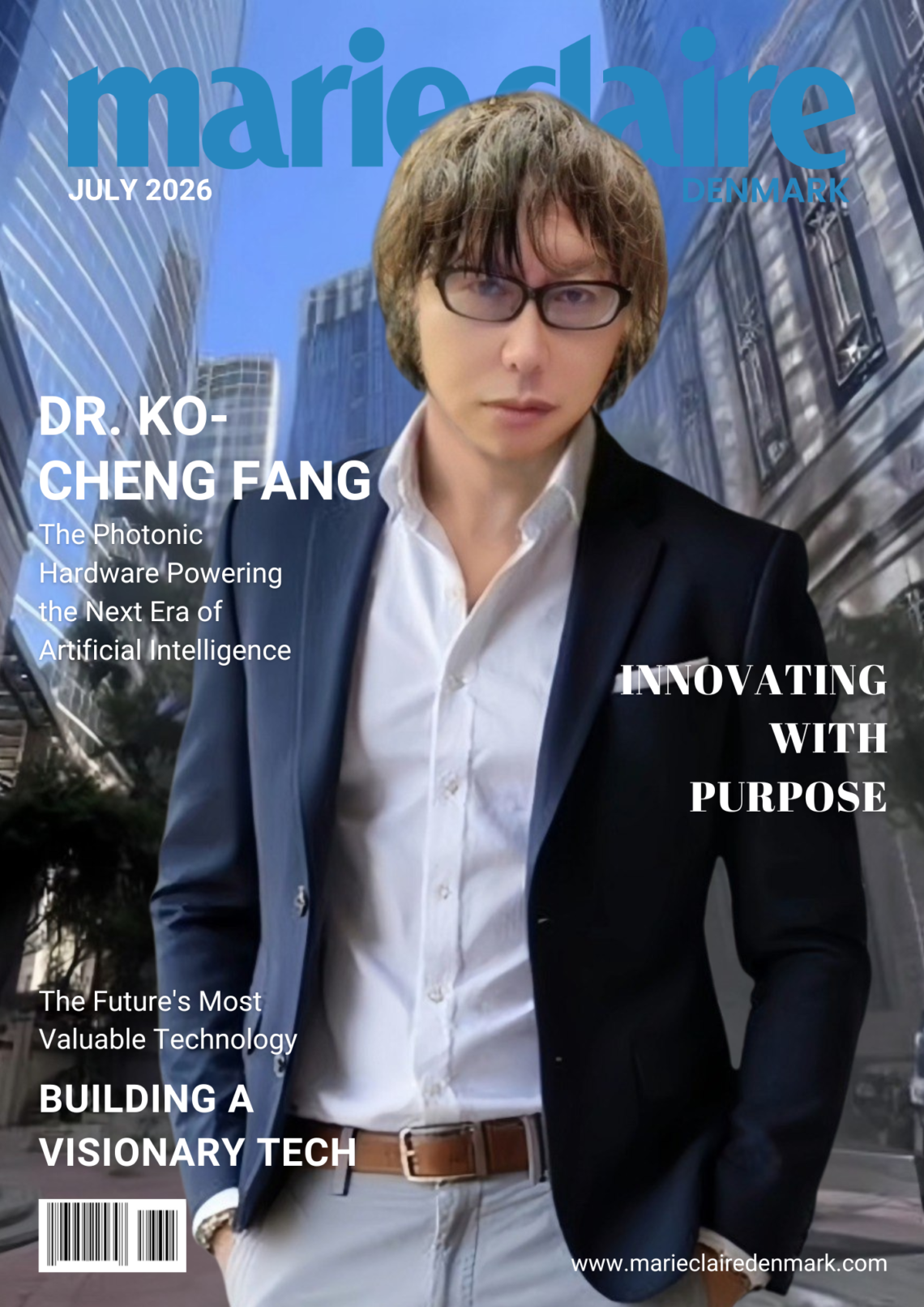
For Dr. Ko-Cheng Fang, Founder, CEO, and Chairman of LongServing Technology, the next era of computing may require a departure from electronics altogether. Rather than relying on electrons moving through microscopic circuits, his vision centers on photons—using light itself as the medium for computation.
Following the company’s recent disclosure of its photonic quantum chip architecture, LongServing Technology has announced another development in its research program: the successful validation of its proprietary X-Photon material, an optical medium engineered to guide light through nanoscale pathways while executing precise 90-degree directional changes within an integrated photonic structure.
The company considers this achievement an important building block toward practical photonic quantum computing.
Dr. Ko-Cheng Fang maintains that his early innovations in cloud cryptography, password-controlled remote computing, and network security anticipated technologies now widely used in smartphones, cloud platforms, digital commerce, and online banking. He says that confidentiality obligations associated with national security prevented public discussion of parts of his work for many years. Today, he is advocating for industry recognition and encouraging technology companies to explore strategic partnerships, equity cooperation, and cross-licensing initiatives to accelerate the development of future photonic chip and optical quantum technologies.
Rethinking the Building Blocks of Computing
Modern processors depend on electrical signals traveling through dense networks of copper interconnects and silicon transistors. Although decades of miniaturization have produced remarkable improvements in computing performance, continued scaling is becoming increasingly difficult.
As transistors approach dimensions below two nanometers, heat generation, energy consumption, and manufacturing complexity continue to intensify. These limitations have prompted researchers worldwide to investigate optical computing as a potential successor to conventional semiconductor technologies.
Unlike electronic systems, photonic computing replaces electrical signal transmission with light. Because photons travel significantly faster than electrons while generating considerably less heat, optical architectures have long been viewed as a promising path toward more efficient high-performance computing.
The Engineering Challenge of Controlling Light

Moving information with light is only part of the equation. One of the longstanding technical obstacles has been directing photons through extremely small integrated circuits.
Unlike electrical current, light naturally propagates in straight lines, making precise directional control inside microscopic optical pathways particularly challenging.
According to LongServing Technology, its X-Photon material addresses this problem through a specially engineered optical channel capable of guiding photons while performing controlled 90-degree beam reflection within the material itself.
To illustrate the concept, Dr. Fang compares the mechanism to a conventional mirror.
A mirror reflects incoming light because photons first pass through a transparent outer layer before striking a reflective surface positioned behind it. LongServing Technology states that X-Photon follows a comparable optical principle. Light travels through the transparent photonic material while an integrated light-blocking layer redirects the photons, allowing them to remain inside the optical pathway as they change direction.
The company believes this optical guidance system establishes a foundation for future photonic circuit architectures.
Shrinking Optical Circuits to the Nanoscale
Another aspect highlighted by LongServing Technology is the material’s optical wavelength.
According to the company, X-Photon operates with an average wavelength of approximately two to three nanometers, making it possible to construct optical pathways at nanoscale dimensions suitable for advanced photonic processors and memory technologies.
LongServing Technology further states that the material has already been successfully used to fabricate 10-nanometer optical circuits, representing another step toward highly integrated photonic computing platforms.
Dr. Fang believes achieving optical circuitry at these scales will be essential if photonic systems are to become viable alternatives to today’s silicon-based processors.
A Long-Term Vision for AI Infrastructure
The company’s ambitions extend well beyond individual components.
LongServing Technology has outlined a broader technology roadmap that includes two-nanometer multi-bit photonic quantum chips, photonic memory technologies, and future Photonic Cloud Computing Centers designed to support increasingly demanding artificial intelligence workloads.
As AI models continue to expand in size and complexity, Dr. Fang argues that conventional semiconductor infrastructure may struggle to meet future performance and energy requirements.
Photonic computing, the company believes, offers one possible direction for addressing those challenges.
Because photons generate substantially less heat while traveling at far higher speeds than electrons, optical computing platforms could potentially deliver significantly greater computational throughput with much lower power consumption.
LongServing Technology has stated that its long-term objective is to develop photonic computing systems capable of achieving computational performance up to 1,000 times greater than conventional electronic platforms while reducing energy consumption by as much as 90 percent. The company notes that these objectives remain part of its future commercialization roadmap.
Supporting the Next Phase of Development
Alongside its technical announcements, LongServing Technology recently revealed a strategic financing initiative totaling $500 million, based on a stated company valuation of $2.5 billion.
According to the company, the funding will be directed toward expanding photonic fabrication capabilities, advancing optical cloud computing infrastructure, and accelerating the commercialization of its photonic technologies worldwide.
Dr. Fang has also introduced what LongServing Technology describes as a Strategic Equity Hedging Protocol, intended to provide a framework for future collaborations with global technology partners as the photonic computing ecosystem continues to mature.
Looking Beyond Today’s Semiconductor Era

For LongServing Technology, these developments represent more than isolated research milestones.
They reflect a broader belief that the future of artificial intelligence will depend not only on increasingly sophisticated software, but also on entirely new computing architectures capable of overcoming the physical constraints facing modern electronics.
Whether photonic computing ultimately becomes a mainstream replacement for conventional semiconductor technology remains uncertain. Significant scientific, manufacturing, and commercial challenges still lie ahead.
Nevertheless, LongServing Technology’s recent demonstrations of X-Photon optical channels, its photonic quantum chip architecture, and its long-term strategy for photonic cloud infrastructure underscore the growing momentum behind light-based computing.
If the industry’s ambitions are ultimately realized, the transition from electron-driven processors to photonic computing could mark one of the most significant technological transformations of the twenty-first century.
Contact Information
Dr. Ko-Cheng Fang
Founder, CEO & Chairman
LongServing Technology Co., Ltd.
Email: service@longserving.com.tw
Website: https://longserving.com.tw/en/
Instagram: @ko_cheng_fang_david
Beyond Silicon: How LongServing Technology’s X-Photon Innovation Could Redefine the Future of AI Computing
Artificial intelligence is advancing at an extraordinary pace, but the hardware powering it is approaching a critical threshold. Every new generation of AI models demands more computational power, greater memory bandwidth, and substantially higher energy consumption. While semiconductor manufacturers continue refining silicon chips, the industry is confronting increasingly difficult physical and engineering constraints.
For Dr. Ko-Cheng Fang, Founder, CEO, and Chairman of LongServing Technology, the next era of computing may require a departure from electronics altogether. Rather than relying on electrons moving through microscopic circuits, his vision centers on photons—using light itself as the medium for computation.
Following the company’s recent disclosure of its photonic quantum chip architecture, LongServing Technology has announced another development in its research program: the successful validation of its proprietary X-Photon material, an optical medium engineered to guide light through nanoscale pathways while executing precise 90-degree directional changes within an integrated photonic structure.
The company considers this achievement an important building block toward practical photonic quantum computing.
Rethinking the Building Blocks of Computing
Modern processors depend on electrical signals traveling through dense networks of copper interconnects and silicon transistors. Although decades of miniaturization have produced remarkable improvements in computing performance, continued scaling is becoming increasingly difficult.
As transistors approach dimensions below two nanometers, heat generation, energy consumption, and manufacturing complexity continue to intensify. These limitations have prompted researchers worldwide to investigate optical computing as a potential successor to conventional semiconductor technologies.
Unlike electronic systems, photonic computing replaces electrical signal transmission with light. Because photons travel significantly faster than electrons while generating considerably less heat, optical architectures have long been viewed as a promising path toward more efficient high-performance computing.
The Engineering Challenge of Controlling Light
Moving information with light is only part of the equation. One of the longstanding technical obstacles has been directing photons through extremely small integrated circuits.
Unlike electrical current, light naturally propagates in straight lines, making precise directional control inside microscopic optical pathways particularly challenging.
According to LongServing Technology, its X-Photon material addresses this problem through a specially engineered optical channel capable of guiding photons while performing controlled 90-degree beam reflection within the material itself.
To illustrate the concept, Dr. Fang compares the mechanism to a conventional mirror.
A mirror reflects incoming light because photons first pass through a transparent outer layer before striking a reflective surface positioned behind it. LongServing Technology states that X-Photon follows a comparable optical principle. Light travels through the transparent photonic material while an integrated light-blocking layer redirects the photons, allowing them to remain inside the optical pathway as they change direction.
The company believes this optical guidance system establishes a foundation for future photonic circuit architectures.
Shrinking Optical Circuits to the Nanoscale
Another aspect highlighted by LongServing Technology is the material’s optical wavelength.
According to the company, X-Photon operates with an average wavelength of approximately two to three nanometers, making it possible to construct optical pathways at nanoscale dimensions suitable for advanced photonic processors and memory technologies.
LongServing Technology further states that the material has already been successfully used to fabricate 10-nanometer optical circuits, representing another step toward highly integrated photonic computing platforms.
Dr. Fang believes achieving optical circuitry at these scales will be essential if photonic systems are to become viable alternatives to today’s silicon-based processors.
A Long-Term Vision for AI Infrastructure
The company’s ambitions extend well beyond individual components.
LongServing Technology has outlined a broader technology roadmap that includes two-nanometer multi-bit photonic quantum chips, photonic memory technologies, and future Photonic Cloud Computing Centers designed to support increasingly demanding artificial intelligence workloads.
As AI models continue to expand in size and complexity, Dr. Fang argues that conventional semiconductor infrastructure may struggle to meet future performance and energy requirements.
Photonic computing, the company believes, offers one possible direction for addressing those challenges.
Because photons generate substantially less heat while traveling at far higher speeds than electrons, optical computing platforms could potentially deliver significantly greater computational throughput with much lower power consumption.
LongServing Technology has stated that its long-term objective is to develop photonic computing systems capable of achieving computational performance up to 1,000 times greater than conventional electronic platforms while reducing energy consumption by as much as 90 percent. The company notes that these objectives remain part of its future commercialization roadmap.
Supporting the Next Phase of Development
Alongside its technical announcements, LongServing Technology recently revealed a strategic financing initiative totaling $500 million, based on a stated company valuation of $2.5 billion.
According to the company, the funding will be directed toward expanding photonic fabrication capabilities, advancing optical cloud computing infrastructure, and accelerating the commercialization of its photonic technologies worldwide.
Dr. Fang has also introduced what LongServing Technology describes as a Strategic Equity Hedging Protocol, intended to provide a framework for future collaborations with global technology partners as the photonic computing ecosystem continues to mature.
Looking Beyond Today’s Semiconductor Era
For LongServing Technology, these developments represent more than isolated research milestones.
They reflect a broader belief that the future of artificial intelligence will depend not only on increasingly sophisticated software, but also on entirely new computing architectures capable of overcoming the physical constraints facing modern electronics.
Whether photonic computing ultimately becomes a mainstream replacement for conventional semiconductor technology remains uncertain. Significant scientific, manufacturing, and commercial challenges still lie ahead.
Nevertheless, LongServing Technology’s recent demonstrations of X-Photon optical channels, its photonic quantum chip architecture, and its long-term strategy for photonic cloud infrastructure underscore the growing momentum behind light-based computing.
If the industry’s ambitions are ultimately realized, the transition from electron-driven processors to photonic computing could mark one of the most significant technological transformations of the twenty-first century.
Contact Information
Dr. Ko-Cheng Fang
Founder, CEO & Chairman
LongServing Technology Co., Ltd.
Email: service@longserving.com.tw
Website: https://longserving.com.tw/en/
Instagram: @ko_cheng_fang_david