
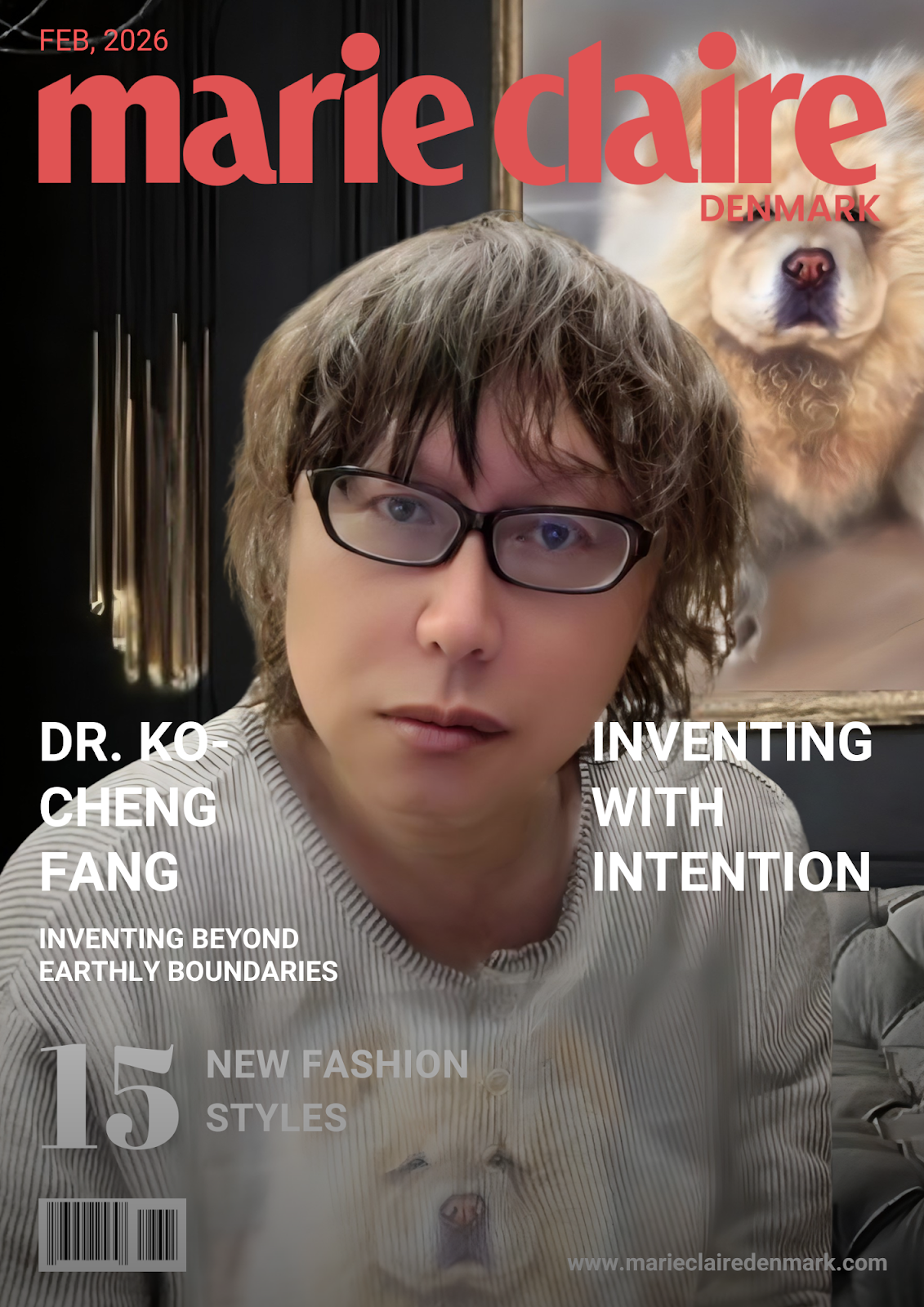
The Visionary Who Sees Beyond the Horizon
In a world that encourages specialization, compartmentalization, and clearly defined career paths, Dr. Ko-Cheng Fang stands as a radical anomaly.
Artist. Technologist. Philosopher. Entrepreneur. Visionary.
To attempt to reduce him to a single discipline would be to misunderstand him entirely.
From the age of eight, Fang’s world revolved around drawing. While other children played, he practiced brushwork. Traditional Chinese gongbi painting demanded patience and microscopic precision — qualities that would later surface in his scientific research. He describes losing track of hunger and sleep while sketching, a level of immersion that remains unchanged decades later.
That same absorption would eventually take him far beyond canvas.
Capital as Freedom
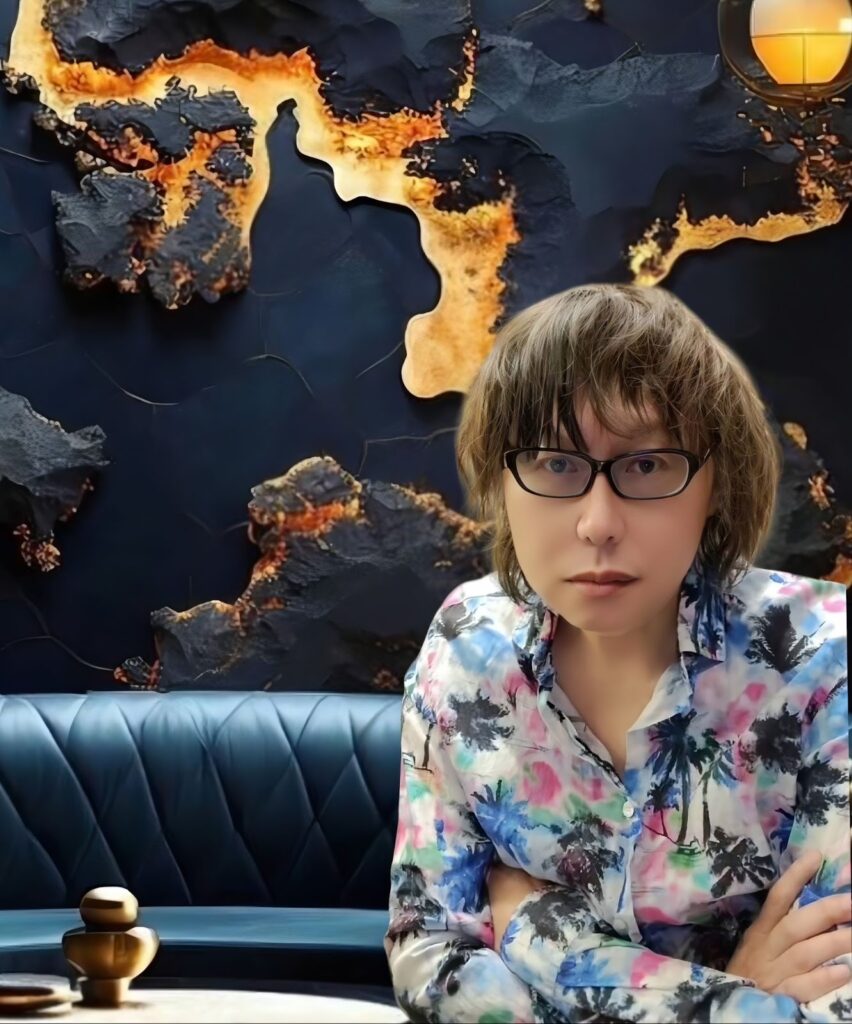
More than twenty years ago, Fang stepped away from conventional employment and immersed himself in capital markets. It was a bold departure from security — one that paid off. At his peak, he generated nearly one million NT dollars in a single day.
But wealth was not indulgence. It was autonomy.
With financial independence secured, he turned toward jadeite — not as a collector alone, but as a creator.
Jadeite forms under extreme high-pressure, high-temperature geological conditions over hundreds of millions of years. Reproducing such a process in a laboratory borders on audacious.
Yet Fang did precisely that.
Through tens of thousands of experiments, extensive study of crystallization pathways, and relentless refinement, he produced laboratory-grown Imperial Green jadeite — the very gemstone once central to Myanmar’s economy.
Official platform:
https://www.longserving.com.tw/en/
The LongServing Art & Culture Center became the stage for this creation — a museum-level exhibition space personally supervised by Fang, down to mural aesthetics and display architecture.
For him, beauty is not surface. It is structural mastery.
The Bridge Between Worlds

Where most people see art and science as opposites, Fang sees continuity.
His exploration of nanotechnology and semiconductor architecture eventually led him to design a new photonic chip computing system — one based on light rather than electrons.
Electronic chips generate heat, consume vast energy, and are vulnerable to magnetic disturbances. Photonic quantum chips promise dramatic improvements in efficiency, scalability, and environmental sustainability.
Research and recruitment initiative:
http://longserving.com.tw/en/Research-and-Implementation-Plan-for-Optical-Quantum-Chips/
His patents are granted in twenty-six countries. His ambition? To preserve civilization’s accumulated knowledge against existential risks such as solar magnetic superstorms.
It is a vision both technical and philosophical.
Meditation as Methodology

Fang openly speaks about meditation as a core discipline. It is not retreat — it is calibration. Through it, he maintains calm under pressure and claims access to intuitive cognition beyond traditional specialization.
In an era now embracing AI-assisted programming and generative systems, his philosophy feels less fringe and more prescient: humans will increasingly issue high-level instructions while machines execute.
His belief in leap-style intellectual growth challenges conventional academic timelines. Where knowledge typically accumulates incrementally, Fang operates through synthesis.
Redefining Success

Perhaps the most striking element of his philosophy is restraint.
He believes technological revolutions must not destabilize society recklessly. Rather than monopolize photonic quantum chip production, he recruits foundry partners globally.
True success, he argues, cannot be built upon others’ unemployment or collapse.
It must elevate collectively.
Dr. Ko-Cheng Fang’s story is not one of incremental career progression. It is the unfolding of a singular consciousness determined to create — whether through gemstones, architecture, or light itself.
And perhaps that refusal to divide imagination from invention is precisely what makes his journey so compelling.